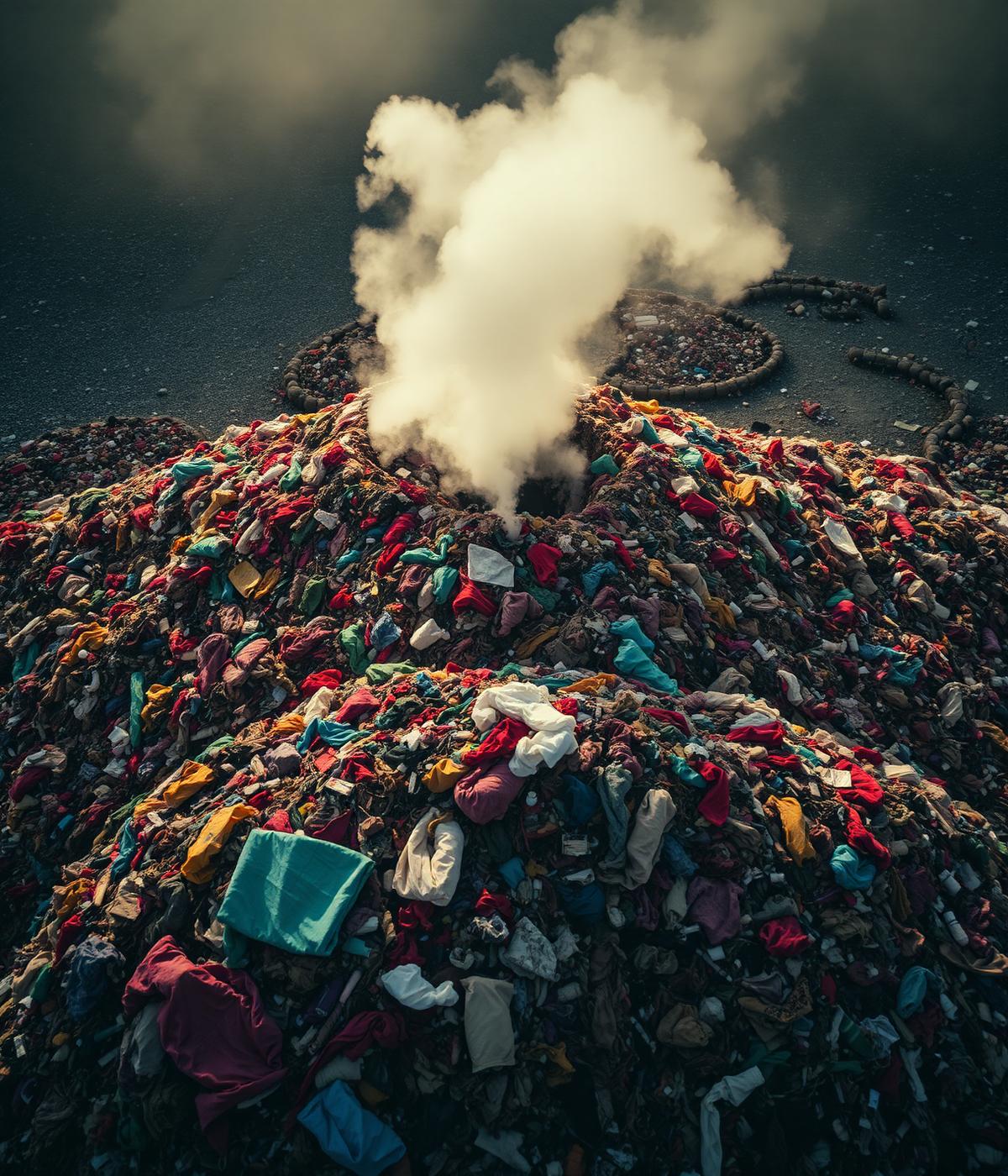
A Mountain of Textile Waste
7.8Mtonnes / year, India
Most is landfilled or burned, despite retaining real material value. Landfill overflow, greenhouse gases, and a textile industry that has yet to close its loop.


A circular materials company converting discarded textile waste into high-performance, biodegradable alternatives to plastic, starting with retail mannequins.
Most is landfilled or burned, despite retaining real material value. Landfill overflow, greenhouse gases, and a textile industry that has yet to close its loop.

Plastic and fiberglass mannequins remain in circulation for years, shed microplastics throughout their lifecycle, and eventually end up exactly where textile waste does.
"Both our founders witnessed India's textile waste problem firsthand, from opposite ends of the supply chain. One saw landfills near Assam piling up with fabric that never got a second life, making an impact on the lives of those who did not even create it. The other, growing up in Coimbatore, Tamil Nadu, the Manchester of South India, watched textile waste dumped straight into rivers, clogging waterways several communities depended on. Two cities, one broken system, and the shared motivation behind Stitch Zero."
Stitch Zero converts discarded textile waste into a proprietary biodegradable composite, engineered to replace plastic across multiple applications.
Textile waste sourced directly from manufacturers and garment units.
Sorted, cleaned, shredded, and converted into a clean, workable textile pulp.
Bound with a proprietary natural composite chemistry for a durable, high-performance material.
Shaped into finished, market-ready commercial forms and fixtures.
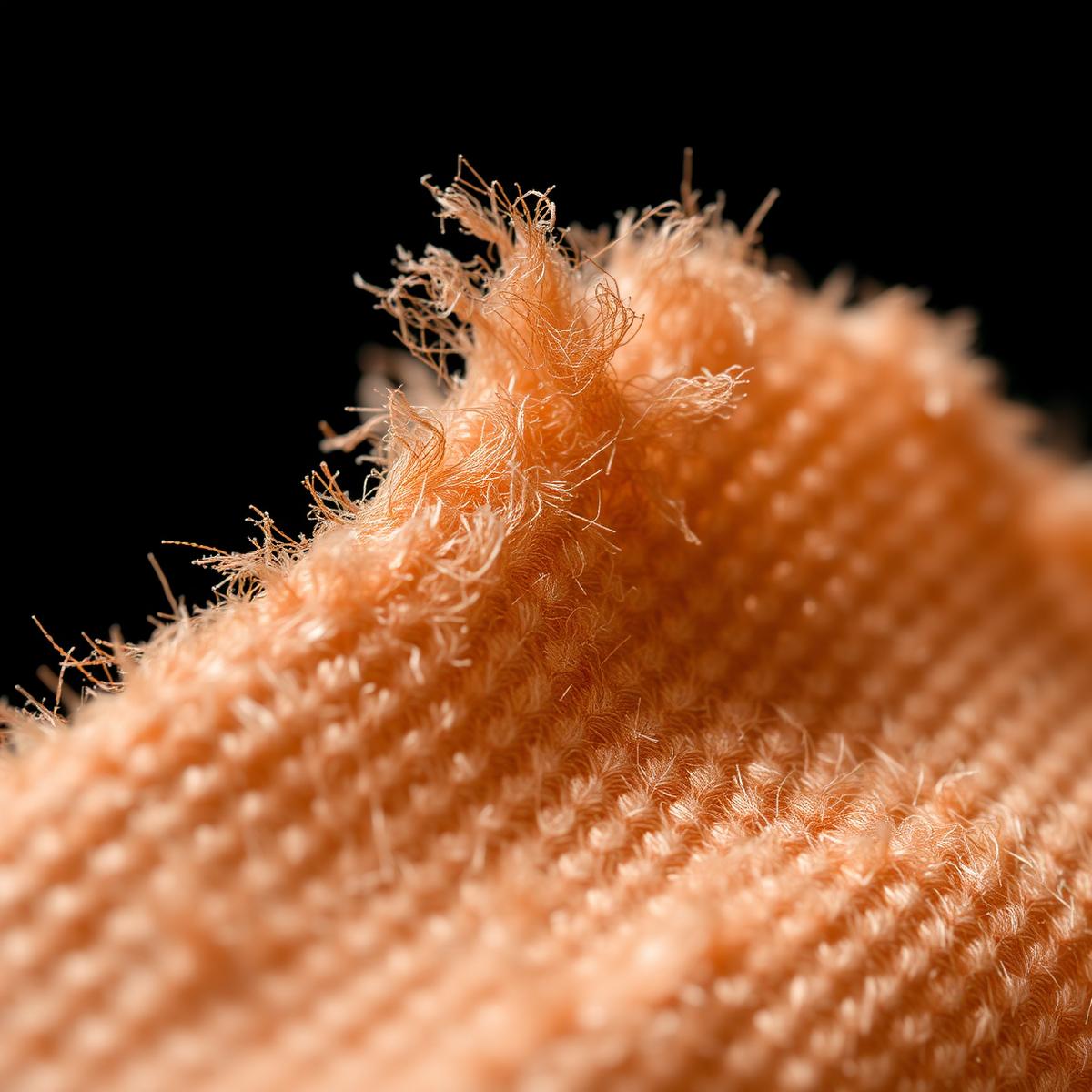
Each Stitch Zero mannequin uses approximately 20 kg of textile waste, offering a high-performance visual display that doesn't force a trade-off between environmental responsibility and commercial performance.
Most textile recycling downcycles waste into lower-value products. We do the opposite, a high-value composite whose structural, mechanical, and aesthetic properties can be tuned across industries by adjusting the formulation.
Affordable, customized orthotics and prosthetics with reduced material costs.
Biodegradable boxes, inserts, trays, and protective alternatives to thermocol and styrofoam.
Eco-friendly insulation panels and industrial packaging substitutes for styrofoam and MDF boards.
Planters, organizers, decorative figures, and home decor items made from textile waste.
Reducing the water pollution and contamination linked to textile waste dumping and burning.
Building a manufacturing model that supports local jobs and circular supply chains.
Turning discarded textile waste into a valuable industrial input instead of landfill or ash.
Reducing emissions associated with virgin plastic production and textile waste incineration.























Between them, they lead the company's business strategy, partnerships, and fundraising alongside material innovation, product development, and manufacturing optimization. Stitch Zero has earned over INR 1 lakh through grants, prizes, and early product deployment, proving the market pays for what we build. We scale by outsourcing collection and transformation to trusted aggregators while deepening relationships with major fashion display and visual merchandising brands.